

Blog
How to Activate Windows Server 2012 R2 Remote Desktop Services User Connection | Step-by-Step Guide

Introduction
In today’s workplaces, educational institutions, and enterprise IT environments, providing secure, flexible, and multi-device access to server resources is essential. The Windows Server 2012 R2 Remote Desktop Services (RDS) User Connection allows individual users to access server resources from multiple devices, including desktops, laptops, and tablets.
Unlike Device CALs, which are tied to a specific device, User CALs are assigned per user, allowing licensed users to access Windows Server 2012 R2 from multiple devices without purchasing extra licenses. This is ideal for businesses, IT teams, remote employees, and educational environments.
Activating your User CAL ensures compliance with Microsoft licensing policies, centralizes management, and provides secure access to applications and data. With proper deployment, administrators can manage users efficiently while ensuring uninterrupted access for employees or students.
Features of Windows Server 2012 R2 RDS User Connection
The Windows Server 2012 R2 Remote Desktop Services User Connection comes with a variety of features for secure, scalable, and efficient remote desktop access:
-
User-Based Licensing
-
Each license is assigned to a specific user.
-
Enables access from multiple devices per user.
-
-
Secure Remote Access
-
Advanced encryption and authentication protect sensitive data.
-
Reference: Microsoft RDS Documentation
-
-
Centralized Management
-
Admins can monitor and manage all users, sessions, and licenses from a single console.
-
Simplifies audits and compliance reporting.
-
-
RemoteApp Support
-
Stream applications to devices without local installation.
-
Reduces hardware dependency.
-
-
Business Continuity
-
Provides access during office closures or network downtime.
-
-
High Performance
-
Optimized for multiple simultaneous users with low-latency sessions.
-
-
Scalable Licensing
-
Add User CALs as your team grows.
-
Cost-effective for expanding organizations.
-
-
Seamless Windows Integration
-
Fully compatible with Windows Server 2012 R2 ecosystem.
-
-
Audit-Ready Compliance
-
Tracks usage for regulatory and licensing audits.
-
Methods of Activation
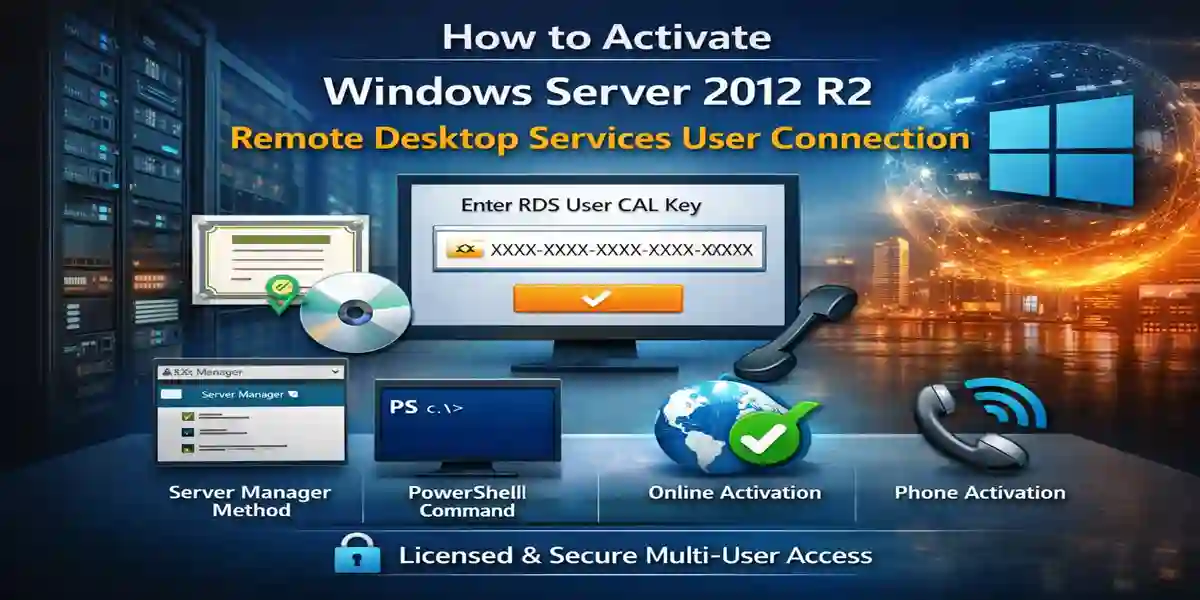
1. Using Server Manager
-
Open Server Manager → Remote Desktop Services → RD Licensing Manager.
-
Right-click your license server and select Activate Server.
-
Enter your User CAL Key and complete the wizard.
-
Verify installation in RD Licensing Manager.
Guide: esoftwarestore Activation Guide
2. Using PowerShell
-
Open PowerShell as Administrator.
-
Add license:
-
Check configuration:
Learn more: esoftwarestore PowerShell Activation
3. Online Activation
-
Connect to Microsoft online licensing service.
-
Enter the User CAL Key and confirm.
4. Phone Activation
-
Call Microsoft support with the installation ID.
-
Enter the confirmation ID provided by Microsoft.
Common Errors and Fixes
-
Activation Failed
-
Cause: Invalid or expired key.
-
Fix: Re-enter key or contact Microsoft Licensing Support
-
-
License Not Found
-
Cause: Server does not recognize User CAL.
-
Fix: Verify Remote Desktop Licensing role and restart server.
-
-
User Limit Exceeded
-
Cause: More users connecting than purchased CALs.
-
Fix: Add more User CALs.
-
-
Connection Denied
-
Cause: Network or firewall issue.
-
Fix: Open required RDS ports.
-
-
RemoteApp Not Available
-
Cause: Application not published.
-
Fix: Use RD Session Host or RemoteApp Manager.
-
Licensing Formulas
-
Total Users = Number of employees requiring RDS access
-
User CAL Requirement = Total simultaneous users
Expansion Formula:
Example: 50 employees → 50 User CALs; growing to 70 → purchase 20 additional CALs.
Conclusion
The Windows Server 2012 R2 RDS User CAL Key provides secure, multi-device access per user, making it ideal for businesses, schools, and IT environments. Its centralized management, RemoteApp support, high performance, and compliance features ensure a reliable and cost-effective remote desktop solution.
Proper activation, troubleshooting, and licensing planning allow organizations to maximize productivity, ensure compliance, and support mobile or remote teams.