

Blog
Autodesk Arnold: The Ultimate Cinematic Rendering Engine for Stunning, Physically Accurate Visuals

Introduction: Why Autodesk Arnold Sets the Gold Standard in Rendering
Autodesk Arnold is widely recognized as one of the most powerful, reliable, and production-proven rendering engines in the world of computer graphics. Used extensively in Hollywood feature films, AAA games, broadcast design, architectural visualization, and product rendering, Arnold has earned a reputation for photorealism, consistency, and scientific accuracy.
Originally developed by Solid Angle and later acquired by Autodesk, Arnold was designed with a singular mission: deliver predictable, physically accurate results at scale. Rather than relying on shortcuts or hacks, Arnold embraces ray-tracing, global illumination, and physically based shading models aligned with well-established principles of optics, light transport, and material science.
What Is Autodesk Arnold?
Autodesk Arnold is a physically based, Monte Carlo ray-tracing renderer designed for high-end production environments. It simulates how light behaves in the real world by tracing rays as they interact with surfaces, volumes, and atmospheres—producing results that closely match real-world photography and cinematography.
Unlike real-time engines, Arnold prioritizes accuracy, stability, and scalability over speed hacks. This philosophy makes it ideal for:
-
Feature films & VFX
-
High-end animation
-
Commercial advertising
-
Architectural visualization
-
Product & industrial design
Arnold integrates seamlessly with industry-standard DCC tools such as Autodesk Maya, 3ds Max, Cinema 4D, Houdini, Katana, and Blender.Professional looking for genuine licence.
Core Philosophy: Physically Based Rendering You Can Trust
Autodesk Arnold is built on a foundation of physically based rendering (PBR) principles that closely follow established scientific consensus in computer graphics and optical physics. Its rendering model is designed to simulate real-world light behavior with exceptional accuracy, ensuring consistent and reliable results across complex production environments.
Arnold achieves this through energy-conserving BRDFs, physically plausible light falloff, and high-fidelity global illumination, allowing materials and lighting to interact exactly as they would in reality. Advanced path tracing with importance sampling further optimizes realism while maintaining computational efficiency, even in large-scale scenes.
This scientifically grounded approach delivers predictable, reproducible renders, significantly reducing trial-and-error workflows. As a result, artists and studios can spend less time troubleshooting technical issues and more time focusing on creative storytelling, visual quality, and production efficiency.
Autodesk Arnold – Feature & Benefit
Physically Based Ray Tracing
Autodesk Arnold uses advanced physically based ray tracing to simulate how light behaves in the real world. This means reflections, refractions, shadows, and indirect lighting follow real optical laws, resulting in highly realistic and predictable renders trusted by film studios and professional artists.
Accurate Global Illumination
Arnold calculates global illumination by tracing indirect light bounces across surfaces. This produces natural lighting, realistic depth, and soft shadow transitions, especially important for interior scenes, architectural visualization, and cinematic environments.
Standard Surface Shader System
The Standard Surface Shader in Arnold is a unified, physically accurate material system. It supports metals, glass, skin, plastics, fabrics, and subsurface scattering, allowing artists to create complex materials without managing multiple shaders.
High-Quality Hair & Fur Rendering
Arnold is widely known for its exceptional hair and fur rendering capabilities. It accurately handles light scattering, transparency, and shading in hair strands, making it ideal for character animation, creatures, and realistic digital humans.
Advanced Volume Rendering
Arnold renders volumetric effects such as smoke, fog, fire, clouds, and atmospheric haze with high realism. Its volume algorithms reduce noise while preserving detail, which is crucial for cinematic VFX and realistic environmental scenes.
Production-Ready Scalability
Arnold is built to scale efficiently from a single workstation to large render farms. This makes it suitable for freelancers, studios, and enterprise pipelines handling thousands of frames without sacrificing consistency or stability.
Deep Autodesk Maya Integration
Arnold is natively integrated into Autodesk Maya, offering smooth workflows for lighting, shading, rendering, and look development. Artists benefit from accurate viewport previews and minimal scene translation issues.
Seamless Autodesk 3ds Max Support
Arnold works seamlessly inside Autodesk 3ds Max, making it a preferred choice for architectural visualization, product rendering, and motion graphics professionals using Max-based workflows.
Cross-Software Compatibility
Arnold supports multiple DCC applications including Maya, 3ds Max, Cinema 4D, Houdini, Katana, and Blender. This flexibility allows studios to maintain consistent rendering quality across different creative tools.
Predictable Lighting Workflow
Arnold’s lighting system behaves consistently across different scenes and scales. Artists can rely on physically correct light intensities and falloff, reducing guesswork and speeding up look-development processes.
Arbitrary Output Variables (AOVs)
Arnold provides detailed AOVs for compositing workflows. These passes allow compositors to fine-tune lighting, reflections, shadows, and colors in post-production without re-rendering entire scenes.
CPU & GPU Rendering Support
Arnold supports both CPU and GPU rendering, allowing artists to choose between maximum accuracy and faster performance. GPU rendering accelerates workflows while maintaining visual consistency with CPU renders.
High Stability for Complex Scenes
Arnold is known for its ability to handle heavy geometry, large textures, and complex lighting setups without crashing. This stability makes it ideal for feature films and large-scale commercial projects.
Industry-Proven Film & VFX Adoption
Arnold is trusted by leading film and VFX studios worldwide. Its consistent output and physically accurate results make it a standard renderer for Hollywood-level productions and broadcast pipelines.
Realistic Subsurface Scattering
Arnold’s subsurface scattering accurately simulates how light penetrates and diffuses through materials like skin, wax, marble, and food, delivering lifelike organic renders.
Reduced Trial-and-Error Rendering
Because Arnold follows real-world physics, artists spend less time tweaking unrealistic settings. This reduces revision cycles and improves overall production efficiency.
Professional Look Development
Arnold is designed for professional look-development workflows, allowing lighting and shading teams to maintain visual consistency across shots, scenes, and entire projects.
Enterprise-Grade Licensing & Support
Autodesk Arnold is available through official Autodesk licensing, ensuring secure downloads, regular updates, long-term support, and compliance with enterprise software standards.
Future-Ready Rendering Technology
With ongoing development in GPU acceleration, USD workflows, and pipeline automation, Arnold continues to evolve alongside modern production and cloud-based rendering standards.
Strong Career & Skill Value
Learning Autodesk Arnold enhances professional credibility. It is a highly sought-after skill in film, animation, architectural visualization, and product design industries.
Trusted & Secure Rendering Solution
Arnold benefits from Autodesk’s secure ecosystem, including encrypted installers, authenticated licensing, and reliable updates—helping users maintain a safe and trustworthy production environment.
Real-World Reviews & Industry Consensus
Across film studios, animation houses, VFX pipelines, and high-end visualization teams, Autodesk Arnold is widely recognized as one of the most reliable and production-proven rendering engines available today. Feedback from professionals consistently reinforces Arnold’s reputation for stability, image quality, and lighting realism—qualities that are critical in deadline-driven environments.
Rock-Solid Stability in Heavy Production Pipelines
One of the most frequently cited strengths of Arnold is its exceptional stability under heavy production loads. Studios regularly deploy Arnold on massive scenes containing millions of polygons, complex shaders, deep texture stacks, and large lighting rigs. Even in these demanding scenarios, Arnold remains dependable, minimizing crashes and unpredictable behavior. This reliability is especially valued in long render jobs and overnight batch rendering, where consistency is essential to avoid costly re-renders.
Clean, Noise-Free Renders with Minimal Tweaking
Lighting and rendering artists consistently praise Arnold for producing clean, noise-free images without excessive manual optimization. Its advanced sampling algorithms, intelligent noise reduction, and physically based path tracing allow artists to achieve high-quality results with fewer parameter adjustments. This efficiency shortens iteration cycles and helps teams meet tight production schedules without compromising visual fidelity.
Superior Lighting Accuracy and Realism
Arnold’s lighting accuracy is another area where professional consensus is strong. Because the renderer adheres strictly to physically based lighting principles, artists can trust that lights behave predictably and realistically. This makes it easier to achieve consistent results across shots, scenes, and sequences—an essential requirement in film, episodic content, and high-end animation where visual continuity matters.
Trusted by VFX Supervisors, Loved by Lighting Artists
VFX supervisors frequently highlight Arnold’s predictability and reliability, noting that it integrates smoothly into established pipelines and scales well across large render farms. At the same time, lighting artists appreciate Arnold’s intuitive controls and artist-friendly workflow, which allow them to focus on creative decisions rather than technical problem-solving.
Industry-Wide Adoption as a Mark of Trust
The widespread adoption of Arnold across major studios and professional workflows reflects a broader industry consensus: Arnold is a renderer built for real-world production, not just test scenes. Its balance of physical accuracy, performance, and usability has made it a trusted standard for feature films, TV series, commercials, and high-end visualization projects.
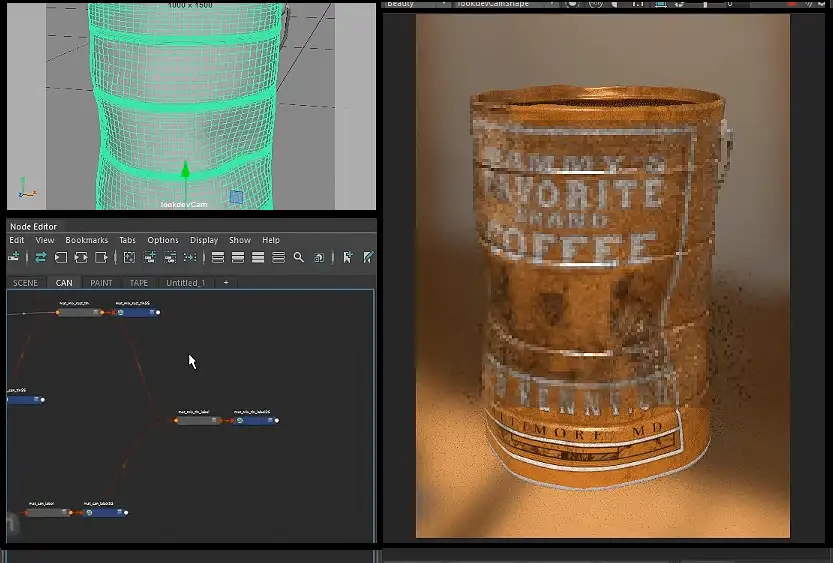
Physically based rendering with Autodesk Arnold for cinematic visuals
Use Cases Across Industries
Autodesk Arnold’s physically based rendering architecture and production-grade reliability make it a versatile solution across multiple creative and industrial sectors. From cinematic storytelling to precision product visualization, Arnold delivers consistent, high-fidelity results wherever realism and accuracy matter.
Film & VFX
Arnold is a trusted rendering engine in blockbuster films and high-end visual effects productions, where realism, scale, and reliability are non-negotiable. It is widely used for rendering hero characters, complex environments, volumetric effects, and photorealistic simulations.
VFX teams rely on Arnold’s accurate global illumination, motion blur, subsurface scattering, and physically correct materials to achieve believable visuals that integrate seamlessly with live-action footage. Its ability to handle extremely dense geometry and massive scenes makes it ideal for feature films and episodic content with demanding visual standards.
Animation & Broadcast
In animation studios and broadcast pipelines, Arnold is valued for its consistent image quality across thousands of frames. Animated series, short films, and commercials benefit from Arnold’s predictable lighting and shading behavior, ensuring visual continuity from shot to shot and episode to episode.
Broadcast teams appreciate Arnold’s efficiency and stability, which help meet tight production schedules without sacrificing quality. Whether it’s stylized animation or realistic CGI, Arnold supports both creative flexibility and technical precision.
Architecture & Interior Design
For architectural visualization and interior design, Arnold excels at accurate daylight simulation, realistic artificial lighting, and physically correct materials. Architects and designers use Arnold to create lifelike renders that accurately represent how spaces will look under real-world lighting conditions.
Its physically plausible light falloff and global illumination make it easier to visualize interiors, exteriors, and mixed lighting scenarios with confidence—reducing guesswork and improving client communication.
Product & Industrial Design
Arnold is also widely adopted in product and industrial design workflows, where photorealism directly impacts marketing, branding, and customer trust. Designers use Arnold to produce high-quality product renders for advertisements, eCommerce listings, and promotional materials.
Accurate reflections, realistic surface materials, and precise lighting allow products to be showcased exactly as they would appear in the real world—often before a physical prototype even exists. This makes Arnold an invaluable tool for both design validation and visual marketing.
Why Arnold Works Across Industries
The common thread across all these industries is Arnold’s ability to deliver predictable, physically accurate, and production-ready results. Its versatility, combined with industry-proven stability, makes it a long-term solution for professionals who need reliability as much as visual excellence.
Autodesk Arnold vs Other Renderers
Choosing the right renderer depends on production scale, artistic goals, and pipeline requirements. Autodesk Arnold distinguishes itself by prioritizing physical accuracy, predictability, and production stability, making it a preferred choice for professional studios and enterprise workflows. Below is a practical comparison with other popular rendering engines.
Arnold vs V-Ray
Arnold and V-Ray are both industry-leading renderers, but they differ in philosophy. Arnold emphasizes simplicity and physically accurate defaults, allowing artists to achieve realistic results with minimal parameter tweaking. This makes it easier to maintain consistency across large teams and long productions.
V-Ray, on the other hand, provides extensive artistic and technical controls, which can be advantageous for users who want fine-grained customization and stylistic flexibility. While powerful, this additional complexity often requires more setup and experience to manage effectively in large pipelines.
Best choice:
-
Arnold → Predictable realism, simplified workflows
-
V-Ray → Advanced artistic control and customization
Arnold vs Redshift
The key difference between Arnold and Redshift lies in rendering approach and performance priorities. Arnold is an unbiased, physically based CPU renderer designed for maximum realism and accuracy, particularly in complex lighting scenarios.
Redshift is a biased GPU renderer, optimized for speed through approximation techniques and GPU acceleration. This makes Redshift extremely fast for iterative look development, but it may require compromises in physical accuracy and scene portability—especially in highly complex or memory-intensive scenes.
Best choice:
-
Arnold → High-end realism, large scenes, CPU-based pipelines
-
Redshift → Fast iteration, GPU-accelerated workflows
Arnold vs Cycles
Blender’s Cycles renderer is well-regarded for its quality and accessibility, particularly in independent and small-team projects. However, Arnold is more production-oriented, built specifically for enterprise-scale pipelines, long render jobs, and multi-application studio environments.
Arnold offers deeper integration with professional DCC tools, robust render farm support, and proven stability when handling extremely dense assets and large shot counts—factors that are critical in film, VFX, and broadcast production.
Best choice:
-
Arnold → Large studios, complex pipelines, mission-critical reliability
-
Cycles → Indie creators, small studios, cost-conscious workflows
Summary: Where Arnold Excels
Autodesk Arnold is best suited for teams that value physical correctness, consistent results, and pipeline reliability over rapid experimentation or stylistic shortcuts. Its design philosophy reduces technical overhead and ensures that what works in one scene will behave the same way across an entire production.
Licensing & Buying Autodesk Arnold Safely
Autodesk Arnold is distributed through official Autodesk subscription licensing, which is the only legitimate way to access the software for professional use. Purchasing Arnold through authorized channels ensures that studios, freelancers, and enterprises receive a secure, fully supported, and legally compliant rendering solution.
Genuine & Verified Software
An official Autodesk license guarantees 100% genuine software, free from tampering, malware, or unauthorized modifications. This protects your systems, project files, and production pipeline from security risks often associated with cracked or unofficial versions. Genuine licensing also ensures full compatibility with Autodesk-supported applications and industry-standard workflows.
Regular Updates & Feature Enhancements
With a valid subscription, users receive regular software updates, including performance optimizations, new rendering features, bug fixes, and compatibility improvements with tools such as Maya, 3ds Max, Houdini, and Cinema 4D. These updates keep Arnold aligned with the latest advancements in rendering technology and evolving production requirements.
Official Technical Support & Documentation
Licensed users gain access to Autodesk’s official technical support, comprehensive documentation, and knowledge bases. This is critical for professional environments where downtime can be costly. Support resources help resolve installation issues, optimize performance, and ensure smooth integration into existing pipelines.
License Compliance for Professional & Commercial Use
Autodesk Arnold subscriptions provide clear legal rights for commercial and professional usage, making them suitable for studios, agencies, and freelancers working on client projects. Compliance with Autodesk licensing terms also reduces legal risk and simplifies audits in enterprise environments.
Scalable Subscription Options
Arnold licensing is designed to scale—from individual artists to large studios—allowing teams to add or adjust licenses as production needs grow. This flexibility makes it easier to manage costs while maintaining access to enterprise-grade rendering capabilities.
Why Buying Arnold Safely Matters
Using officially licensed Arnold software ensures long-term reliability, security, and peace of mind. It protects creative investments, guarantees consistent performance, and provides access to the tools and support professionals rely on for mission-critical rendering work.
Frequently Asked Questions (FAQs)
Is Autodesk Arnold suitable for beginners?
Yes. While powerful, Arnold’s clean UI and physically based approach make it easier to learn compared to overly complex renderers.
Does Arnold support GPU rendering?
Yes. Arnold GPU accelerates rendering on modern NVIDIA GPUs while maintaining visual parity with CPU renders.
Which software works best with Arnold?
Autodesk Maya and 3ds Max offer the deepest integration, but Arnold performs excellently across supported DCCs.
Is Arnold used in Hollywood movies?
Absolutely. Arnold is a trusted renderer in major feature films, TV series, and VFX productions.
Can Arnold handle large, complex scenes?
Yes. Arnold is optimized for heavy geometry, large textures, and complex lighting setups.