

Blog
How to Activate SQL Server 2013 | Full 2026 Guide with Troubleshooting & Licensing

Introduction
Microsoft SQL Server 2013 is one of the most widely used database management systems by businesses, developers, and IT professionals. Successfully activating SQL Server 2013 ensures full functionality, compliance, and access to advanced features like replication, performance tuning, and BI tools. In this detailed guide, we’ll walk you through the activation process, explain licensing types, highlight common errors and their fixes, and provide expert tips to make the process smooth and error‑free.
Proper activation also ensures seamless integration with applications and avoids compliance issues. Whether you are new to SQL Server or upgrading from an older version, this article will equip you with everything you need to activate SQL Server 2013 quickly and correctly.
1. What Is SQL Server 2013?
Microsoft SQL Server 2013 is a relational database management system (RDBMS) used to store and retrieve data for a wide range of applications. It supports structured queries, analytics, reporting services, integration services (SSIS), and scalable architecture for enterprise solutions.
Built for performance, reliability, and security, SQL Server 2013 remains a popular choice for businesses transforming their data infrastructure.
2. Key Features of SQL Server 2013
SQL Server 2013 brought a host of new features that improved performance and provided better tools for developers:
✔ Enhanced In‑Memory Analytics
SQL Server 2013 introduced In‑Memory ColumnStore and performance enhancements for OLTP workloads. This improves query speed drastically.
✔ AlwaysOn High Availability
The AlwaysOn feature delivers high availability and disaster recovery through multiple replicas.
✔ Improved Security
With features like data encryption and auditing, SQL Server 2013 secures your business data efficiently.
✔ Scalability & Integration
It supports large data volumes and integrates seamlessly with other Microsoft tools like Power BI.
✔ Integration Services (SSIS)
Better ETL support increased automation and data integration capacity.
✔ Reporting & Analysis Services
Reporting Services (SSRS) become more robust for business intelligence reporting.
3. SQL Server 2013 Licensing & Versions
Understanding licensing is critical before activation. SQL Server 2013 licenses are sold per core or server + CAL (Client Access License) basis.
Main Editions
| Edition | Best For | Licensing Model |
|---|---|---|
| Express | Free & lightweight apps | Free |
| Standard | Small to medium businesses | Core or Server + CAL |
| Enterprise | Large organizations | Core‑based |
| Developer | Development/testing | Free (non‑production) |
For purchasing authentic licenses, visit esoftwarestore SQL Server 2013 Licenses.
Licensing Types
- Core Based – Licenses based on CPU cores.
- Server + CAL – License the server and each user/device needs a CAL.
- Free Express/Developer – No activation required for Express; Developer is free for development only.
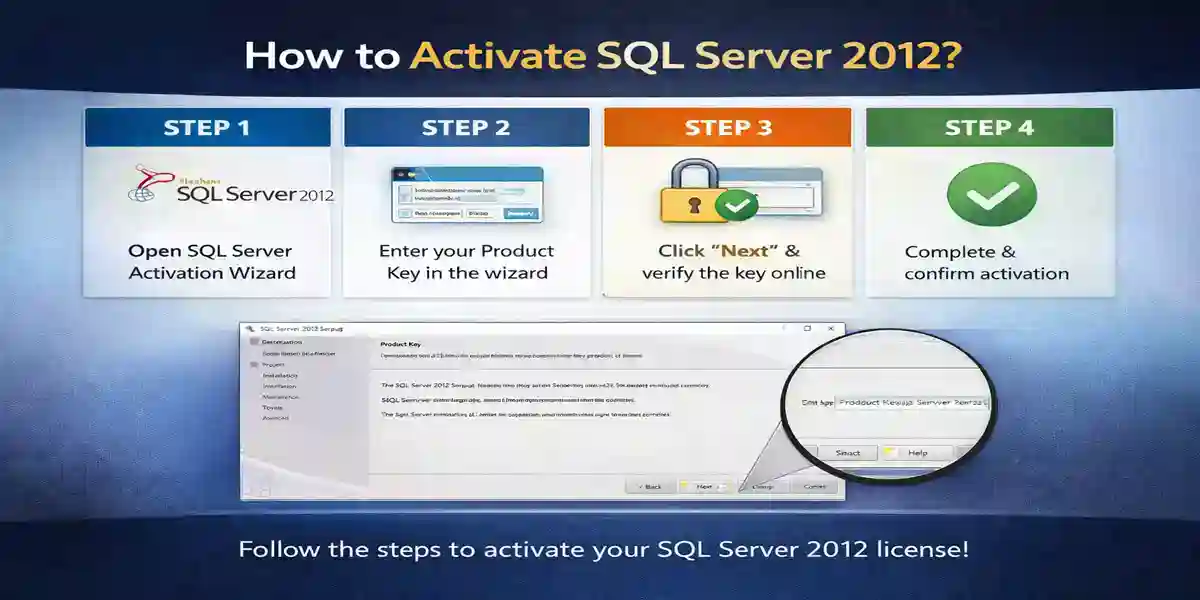
4. How to Activate SQL Server 2013
Step 1 – Launch Setup
⚙ Insert SQL Server 2013 ISO or DVD.
➤ Run setup.exe as Administrator.
Step 2 – Choose Edition Upgrade
⚙ In the SQL Server Installation Center:
- Click Maintenance
- Select Edition Upgrade
Step 3 – Enter Product Key
Enter your 25‑character SQL Server 2013 product key.
Tip: Always copy/paste the key to avoid errors.
Step 4 – Accept License Terms
Review and check “I accept the license terms”.
Step 5 – Install Support Files
Installation center will check system prerequisites.
Step 6 – Complete Upgrade
Follow wizard prompts until activation is completed.
5. Common Activation Errors & Fixes
Even simple processes sometimes fail. Here are common activation errors and how to fix them:
❌ Error: Invalid Product Key
Cause: Key mistyped or not valid for edition.
Fix: Double‑check the edition you’re activating and the key. Visit your license portal at esoftwarestore License Manager.
❌ Error: Activation Failure Due to Firewall
Cause: Firewall blocking activation service.
Fix: Temporarily disable firewall or add exceptions for SQL Server setup.
❌ Error: License Not Found
Cause: Missing or corrupted license file.
Fix: Re‑enter the key, repair installation via Programs & Features → SQL Server 2013.
❌ Error: Edition Mismatch
Cause: Trying to activate key for a different edition (e.g., Enterprise key on Standard).
Fix: Ensure key matches the edition installed.
6. Activation Using Command Line (Advanced)
You can activate via command line for automation:
Replace PID with your product key. For more on unattended installs, see Microsoft docs.
7. Troubleshooting Activation Failures
If activation did not succeed:
✔ Check Event Logs
Open Windows Event Viewer → Application Logs for SQL Server errors.
✔ Verify Network Connectivity
Ensure internet access to Microsoft activation servers.
✔ Repair Installation
Control Panel → Programs & Features, select SQL Server 2013 → Repair.
8. Activation Verification
Once you’ve activated SQL Server 2013:
- Open SQL Server Management Studio (SSMS)
- Go to Help → About
You should see the product edition and license status.
9. Best Practices to Avoid Issues
✔ Always use genuine product keys from trusted sources like esoftwarestore License Store.
✔ Backup your system before activation
✔ Keep your Windows Server fully updated
✔ Follow Microsoft activation guides.
10. Conclusion
Activating SQL Server 2013 correctly is essential for unlocking its full power. Whether you are upgrading, installing for the first time, or troubleshooting issues, this guide provides clear, practical steps and solutions. Always use genuine licensed software and follow Microsoft’s licensing terms to avoid compliance issues.
FAQs (Frequently Asked Questions)
Q1. Do I need internet to activate SQL Server 2013?
Yes, internet access helps connect to Microsoft activation servers, although manual activation is also possible.
Q2. Can I transfer SQL Server 2013 license to another machine?
Yes, depending on the license type. Server + CAL may not be portable, while core‑based may allow transfer.
Q3. Is SQL Server 2013 still supported?
It’s an older version; extended support may be limited. Consider upgrading for latest security and features.