

Blog
Autodesk Forma: The Ultimate AI-Powered Platform for Smarter, Sustainable Early-Stage Design

Introduction: Why Autodesk Forma Is Transforming Modern Architecture
In the contemporary architecture, engineering, and construction (AEC) industry, the earliest design decisions carry the greatest weight. Choices made during concept and feasibility stages influence project cost, environmental performance, compliance, user comfort, and long-term asset value more than any later adjustment. This reality is widely accepted across architectural research and sustainable design literature—and it is precisely where Autodesk Forma delivers extraordinary value.
Autodesk Forma is a cloud-native, AI-powered design intelligence platform built specifically for early-stage and conceptual design. Rather than focusing on drawings or construction documentation, Forma helps teams think better before they build—an approach aligned with established principles of evidence-based design, passive environmental optimization, and lifecycle-aware planning.
Unlike traditional CAD or BIM tools, which typically enter the workflow after major decisions are already locked in, Forma operates where change is fast, inexpensive, and strategically powerful. It empowers architects, urban designers, planners, and developers to explore more options, reduce uncertainty, and design with confidence from day one.
What Is Autodesk Forma?
Autodesk Forma is a cloud-based conceptual design and site-analysis platform that integrates artificial intelligence, real-time environmental simulation, and generative design workflows. It enables rapid evaluation of how design decisions affect: Sunlight and shadow, Wind comfort and exposure, Noise impact, Carbon-related performance indicators, Zoning and regulatory feasibility, Urban livability and density.
Forma is part of the Autodesk AEC Cloud ecosystem, meaning concepts created in Forma can flow smoothly into detailed BIM tools such as Revit when projects move forward.
Why Autodesk Forma Matters in the AEC Industry
Traditional design workflows often postpone environmental and performance analysis until schematic or detailed design phases—when changes are expensive and politically difficult. Autodesk Forma reverses this inefficiency by embedding analysis directly into conceptual design.
Key Problems Autodesk Forma Solves
1. Guesswork During Site Feasibility and Early Planning
Early-stage design has traditionally relied on experience-based judgment rather than measurable data. Autodesk Forma replaces guesswork with data-backed insights, allowing teams to test multiple design scenarios against real-world conditions before committing to a direction.
2. Late Discovery of Zoning, Shadow, or Environmental Conflicts
Zoning violations, excessive shadow impact, or poor daylight performance are often discovered too late. Forma highlights these constraints at the concept stage, reducing redesign cycles and preventing approval delays.
3. Time-Consuming Manual Site Analysis
Manual studies for sunlight, wind, noise, and climate data can take days or weeks. Forma automates these analyses in real time, dramatically accelerating early-stage decision-making and freeing teams to focus on design quality.
4. Disconnected Concept and BIM Workflows
Traditional tools create a gap between concept design and BIM production. Forma bridges this gap by enabling smooth transitions from early ideas into detailed BIM workflows, reducing rework and information loss.
5.Designing with Insight, Not Assumptions
With Autodesk Forma, design teams move from reactive problem-solving to proactive decision-making. By integrating intelligence at the earliest stage, Forma empowers AEC professionals to reduce risk, improve sustainability outcomes, accelerate approvals, and deliver better-performing projects—starting from day one.
Core Features of Autodesk Forma
1. AI-Powered Site Analysis
Autodesk Forma’s AI-powered site analysis automatically processes geospatial, environmental, and contextual data to deliver immediate insight into site conditions. Instead of manually collecting sun path diagrams, wind studies, or noise data from multiple sources, Forma centralizes this intelligence in one interactive interface.
Architects can instantly visualize solar exposure throughout the year, understand prevailing wind patterns, assess noise impact from roads or rail, and evaluate topography and buildable areas. This capability reflects well-established environmental design methods—such as solar orientation studies and wind comfort modeling—but makes them accessible within minutes rather than days.
The result is a dramatic reduction in uncertainty during feasibility studies and early design reviews. Teams can validate whether a site supports desired density, comfort, and sustainability goals before committing resources.
2. Generative Massing & Concept Design
Generative massing in Autodesk Forma allows designers to rapidly create, compare, and refine multiple building forms based on zoning rules, height limits, floor area ratios (FAR), and environmental performance targets. Instead of manually modeling each option, Forma leverages AI to explore design permutations that meet defined constraints.
This approach supports design exploration without creative paralysis. Architects can test bold ideas while ensuring feasibility, and developers gain clarity on yield potential early in the process. Importantly, generative design aligns with the growing consensus that option-based evaluation leads to better design decisions than single-solution thinking.
Forma’s massing tools enable informed trade-offs between density, daylight, and comfort—helping teams converge on solutions that balance architectural ambition with practical constraints.
3. Real-Time Sustainability & Environmental Feedback
Sustainability is most effective when addressed early. Autodesk Forma provides real-time environmental feedback on daylight access, solar exposure, wind comfort, and carbon-related indicators as designs evolve.
These insights align with globally recognized principles such as passive solar design, daylight optimization, and climate-responsive architecture. Rather than treating sustainability as a checklist item, Forma embeds it directly into the creative process—supporting better outcomes with less effort.
By visualizing performance impacts instantly, teams can adjust massing and orientation to improve energy efficiency and occupant comfort before costly redesigns occur.
4. Cloud-Based Collaboration
Autodesk Forma operates entirely in the cloud, eliminating the need for high-performance local hardware. This architecture supports real-time collaboration, allowing teams and stakeholders to review and discuss concepts directly in a web browser.
For modern AEC practices—often distributed across cities or countries—this is transformative. Decision-makers gain immediate access to visual, data-driven insights, accelerating approvals and reducing miscommunication.
5. Seamless BIM Workflow Integration
Forma integrates smoothly with downstream BIM tools, ensuring that conceptual intelligence is not lost when projects progress. This continuity reduces rework and maintains design intent from early vision through detailed development.
Benefits of Using Autodesk Forma
1. Faster Decision-Making Through Instant Feedback
One of the most significant advantages of Autodesk Forma is its ability to provide instant, data-driven feedback during the earliest design stages. In traditional workflows, architects often wait days or weeks for environmental studies, consultant input, or manual simulations before validating a concept. This delay slows momentum and forces teams to make provisional decisions based on incomplete information.
Autodesk Forma removes this bottleneck by delivering real-time analysis for factors such as sunlight, shadow impact, wind exposure, noise levels, and site constraints directly within the conceptual design environment. Designers can instantly test multiple massing options, orientations, and layouts and immediately see how each decision affects performance and feasibility.
This rapid feedback loop enables teams to iterate faster, discard weak options early, and converge on stronger solutions with confidence. Instead of debating assumptions, project teams can align decisions around measurable outcomes. As a result, early-stage design becomes more agile, collaborative, and efficient—helping projects move forward decisively without sacrificing quality or accuracy.
2. Higher Sustainability Outcomes via Early Optimization
Sustainability performance is largely determined by decisions made before detailed design even begins. Building orientation, massing, density, and site placement all have a profound impact on energy efficiency, daylight access, thermal comfort, and environmental footprint. Autodesk Forma enables teams to optimize these factors at the moment they matter most.
By embedding environmental and climate analysis directly into early-stage workflows, Forma allows architects to understand the sustainability implications of their design choices in real time. Teams can explore how different configurations affect solar exposure, shading, and environmental comfort long before committing to materials or systems.
This early insight encourages performance-led design rather than compliance-driven fixes later. Instead of retrofitting sustainability solutions after problems appear, architects can design responsibly from the outset. The result is better-performing buildings, improved alignment with sustainability goals and regulations, and fewer compromises during later project phases—all while maintaining design intent.
3. Reduced Project Risk by Identifying Issues Early
Project risk in the AEC industry often stems from late discovery of constraints—zoning conflicts, environmental impacts, or site limitations that surface after designs are already approved or communicated to stakeholders. Autodesk Forma significantly reduces this risk by revealing potential issues during the concept stage, when change is still easy and inexpensive.
Forma helps teams identify regulatory conflicts, shadow impacts on surrounding buildings, environmental performance gaps, and site feasibility challenges early in the process. This proactive visibility prevents costly redesigns, approval delays, and last-minute scope changes that can strain budgets and timelines.
By shifting risk discovery upstream, Forma enables organizations to make informed decisions before commitments are locked in. This leads to greater predictability, stronger project control, and improved confidence among stakeholders. Ultimately, fewer surprises mean smoother project delivery and a much lower likelihood of costly downstream corrections.
4. Improved Client Communication with Visual Evidence
Communicating early-stage design ideas to clients and non-technical stakeholders is often challenging. Traditional reports, spreadsheets, or abstract explanations rarely convey the full impact of design decisions. Autodesk Forma improves this process by providing clear, visual, and data-backed representations of design performance.
With Forma, architects can visually demonstrate how a design responds to site conditions, environmental factors, and sustainability goals. Clients can see evidence-based comparisons between alternatives rather than relying on subjective descriptions. This transparency builds trust and makes complex technical concepts easier to understand.
Better communication also leads to faster approvals and fewer misunderstandings. When clients clearly understand why a design choice is better—supported by measurable data—they are more confident in decisions. Forma transforms early design conversations from opinion-driven debates into informed, collaborative discussions grounded in visual proof.
5. Competitive Advantage in RFPs and Feasibility Studies
In competitive markets, firms must demonstrate not only creativity but also strategic insight, technical rigor, and risk awareness. Autodesk Forma provides a powerful advantage in RFP responses, feasibility studies, and early-stage proposals by enabling teams to present data-supported concepts from day one.
Firms using Forma can show that their designs are informed by real site conditions, environmental analysis, and performance metrics—before detailed modeling even begins. This signals professionalism, foresight, and reduced project risk to clients, developers, and public authorities.
By delivering smarter feasibility assessments and clearer early-stage insights, Forma helps firms stand out in competitive bids. It demonstrates that the team is capable of making informed decisions quickly, reducing uncertainty, and delivering better outcomes. In an industry where early confidence often determines who wins the project, Autodesk Forma becomes a strategic differentiator rather than just a design tool.
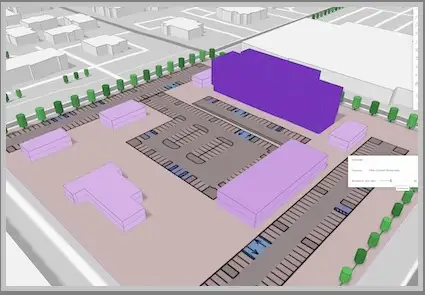
– Autodesk Forma cloud-based architectural design software for early-stage planning
Who Uses Autodesk Forma? (Use Cases)
1. Architectural Firms
Architectural firms are among the primary users of Autodesk Forma, especially during concept design and early feasibility stages. At this phase, architects must evaluate multiple ideas quickly while balancing creativity, site constraints, regulations, and sustainability goals. Traditionally, much of this work relied on assumptions or delayed consultant studies. Autodesk Forma replaces that uncertainty with real-time, AI-driven insights.
With Forma, architectural teams can instantly test massing options, building orientation, and site layouts while receiving immediate feedback on daylight, shadow impact, wind, and environmental performance. This enables faster iteration and stronger early decisions, reducing redesign later in the project. Forma also helps firms present data-backed concepts to clients, improving confidence and speeding up approvals.
Many firms integrate Forma alongside professional design and documentation tools such as architecture design software solutions to create a seamless workflow from concept to delivery.
2. Urban Planners
Urban planners use Autodesk Forma to evaluate large-scale site feasibility, density, and environmental impact during early planning and master-planning stages. Planning decisions affect entire communities, making early accuracy critical. Forma enables planners to analyze sunlight access, wind patterns, noise, and spatial relationships across neighborhoods or districts before plans are finalized.
By using real-world data and AI-driven analysis, planners can test multiple urban scenarios quickly and understand how design decisions affect livability and sustainability. This supports better-informed zoning proposals, policy discussions, and stakeholder engagement. Visual outputs from Forma also make it easier to communicate complex planning concepts to municipalities and the public.
Urban planning teams often combine Forma with urban planning and smart city software tools to align early-stage analysis with long-term development strategies.
3. Real Estate Developers
For real estate developers, Autodesk Forma is a strategic decision-making tool that helps determine whether a project is viable before major investments are made. Early-stage feasibility—such as buildable area, height limits, environmental constraints, and site performance—directly impacts profitability. Forma allows developers to explore these factors quickly and visually.
By testing multiple development scenarios early, developers can assess risk, compare options, and choose paths that maximize value while minimizing regulatory and environmental surprises. Forma also helps developers communicate feasibility clearly to investors, architects, and authorities, reducing uncertainty and speeding up decision cycles.
Developers often use Forma alongside real estate feasibility and planning software to support smarter land acquisition and development strategies.
4. Sustainability Consultants
Sustainability consultants rely on Autodesk Forma to influence environmental performance at the earliest possible stage, when design decisions have the greatest impact. Forma enables consultants to analyze daylight access, solar exposure, climate response, and environmental constraints before detailed design begins.
This early insight allows sustainability experts to guide architects and developers toward more responsible design choices from day one, rather than attempting costly corrections later. Forma supports performance-led discussions and aligns projects with sustainability standards, regulations, and long-term environmental goals.
Consultants frequently integrate Forma with broader sustainable architecture and green building software to ensure projects meet both environmental targets and business objectives.
5. Design-Build Organizations
Design-build organizations benefit from Autodesk Forma because it aligns design intent, constructability, and feasibility early in the project lifecycle. These firms manage both design and construction responsibilities, making early accuracy critical to cost control and delivery timelines.
Forma allows design-build teams to evaluate site conditions, environmental performance, and massing feasibility before committing to schedules or budgets. By identifying constraints early, teams reduce change orders, coordination issues, and downstream rework. Forma also supports collaboration across multidisciplinary teams, helping designers, engineers, and builders align around shared data.
Many design-build firms pair Forma with integrated design-build and BIM workflow tools to maintain continuity from concept through construction.
Autodesk Forma Reviews & Industry Reception
Across the Architecture, Engineering, and Construction (AEC) industry, Autodesk Forma has been widely recognized as a transformational platform for early-stage design and planning. Professionals consistently highlight that Forma addresses a long-standing gap in architectural workflows: the lack of reliable, data-driven insight during the concept and feasibility phase.
One of the most frequently praised aspects of Forma is its speed and clarity in early design. Architects and planners report that Forma dramatically reduces the time required to evaluate site conditions, massing options, and environmental factors. Instead of waiting for external studies or manual simulations, teams can explore multiple scenarios in real time, enabling faster alignment and more confident early decisions.
Another major point of praise is Forma’s sustainability-first approach. Industry professionals appreciate that environmental and climate considerations are no longer an afterthought but an integrated part of conceptual design. By embedding sustainability insights early, Forma supports more responsible architecture and helps teams meet modern regulatory and environmental expectations with fewer compromises later.
Forma is also widely regarded as having a transformative impact on feasibility studies. Developers, consultants, and architects note that the platform improves risk assessment, reduces uncertainty, and strengthens early-stage proposals by grounding them in measurable data rather than assumptions.
Industry publications and thought leaders consistently describe Autodesk Forma as a forward-looking architectural technology platform, positioning it as a key driver in the shift toward AI-powered, performance-led design in the AEC industry.
Autodesk Forma Licensing & Pricing
Autodesk Forma is offered exclusively through a subscription-based licensing model, reflecting its cloud-native, continuously evolving design philosophy. Unlike traditional perpetual desktop software, Forma is designed as a Software-as-a-Service (SaaS) platform, giving users ongoing access to the latest features, performance improvements, and analytical capabilities without the need for manual upgrades or version migrations.
With subscription licensing, users gain full cloud access to Autodesk Forma’s AI-driven tools for early-stage site analysis, feasibility studies, and conceptual design. Because Forma runs in the cloud, there is no need for high-end local hardware or complex installations. Updates are delivered automatically, ensuring that architects and planners always work with the most current analysis methods, data models, and performance enhancements.
Pricing for Autodesk Forma typically depends on subscription duration (monthly or annual) and organizational agreements, such as individual licenses or enterprise plans. This flexible structure allows firms of different sizes—from small studios to large multinational AEC organizations—to scale usage based on project demand and team size. Subscription pricing also simplifies budgeting by converting large upfront software costs into predictable operational expenses.
Another key advantage of Forma’s licensing model is collaboration and accessibility. Since access is tied to user accounts rather than physical machines, teams can collaborate across locations and disciplines more easily. This makes Forma especially suitable for modern, distributed design teams.
Overall, Autodesk Forma’s subscription-based licensing supports continuous innovation, scalability, and cloud collaboration, aligning with the evolving needs of the AEC industry and the shift toward data-driven, AI-powered early-stage design.
Security, Trust & E-A-T Compliance
Autodesk Forma is built on an enterprise-grade security foundation, reflecting the expectations of professional firms operating in regulated, high-value AEC environments. As a cloud-native platform developed by Autodesk, Forma inherits Autodesk’s long-standing commitment to security, reliability, and compliance—key pillars of E-E-A-T (Experience, Expertise, Authoritativeness, and Trustworthiness).
At the infrastructure level, Autodesk Forma operates on secure, enterprise-class cloud architecture designed to protect sensitive project data throughout the design lifecycle. This infrastructure is engineered for high availability, resilience, and controlled access, ensuring that critical early-stage design information remains protected while still accessible to authorized users.
All data exchanged within Forma is protected through encrypted data transmission, safeguarding information as it moves between users, collaborators, and cloud services. Encryption helps prevent unauthorized access, data interception, or tampering—an essential requirement for organizations handling confidential site data, proprietary designs, or commercially sensitive feasibility studies.
Forma is also designed to align with global IT governance and compliance policies, making it suitable for professional firms, large enterprises, and public-sector organizations. This includes adherence to widely recognized security frameworks, data protection standards, and operational best practices commonly required by corporate IT departments.
Together, these measures reinforce trust, reliability, and professional credibility. For AEC organizations, this means Autodesk Forma is not only a powerful AI-driven design platform, but also a secure and dependable environment that supports responsible data handling, client confidence, and long-term organizational trust.
Frequently Asked Questions (FAQs)
Is Autodesk Forma suitable for small firms?
Yes. Autodesk Forma is well suited for small and mid-sized architectural firms because of its cloud-based, subscription-driven model. There is no need for expensive infrastructure, dedicated servers, or high-end hardware. Small teams can access the same AI-powered site analysis, sustainability insights, and feasibility tools used by large enterprises, but without enterprise-level overhead. This makes Forma an accessible entry point for firms that want to compete on insight and performance rather than size. Many smaller practices also pair Forma with other early-stage design tools available via trusted software providers like esoftwarestore, allowing them to scale capabilities as their workload grows.
Does Autodesk Forma replace Revit?
No. Autodesk Forma does not replace Revit—it complements it. Forma focuses on early-stage concept design, feasibility analysis, and site intelligence, while Revit is a BIM tool used for detailed design, documentation, and construction coordination. Forma helps teams make better decisions before committing to BIM models. Once a strong concept is validated in Forma, projects can transition smoothly into Revit for detailed development, reducing rework and improving downstream efficiency. Autodesk positions Forma as part of a connected AEC workflow rather than a standalone replacement.
Is Autodesk Forma good for sustainable design?
Yes—sustainability is one of Forma’s core strengths. The platform embeds climate, daylight, and environmental analysis directly into the earliest design stages, when sustainability outcomes are most easily influenced. Rather than treating sustainability as a late-stage compliance task, Forma enables performance-led design from day one. This helps teams reduce environmental impact, meet regulations more easily, and avoid costly retrofits later.
Can developers use Autodesk Forma?
Absolutely. Real estate developers use Autodesk Forma extensively for site feasibility, massing studies, and early risk assessment. Forma helps developers understand what can be built, how a site performs, and where potential constraints exist—before major financial commitments are made. This leads to better investment decisions and clearer communication with architects and stakeholders.
Does Autodesk Forma require powerful hardware?
No. Autodesk Forma runs entirely in a web browser, leveraging cloud computing instead of local processing. This means users can access Forma from standard laptops without specialized graphics hardware, making it ideal for modern, distributed teams.
Conclusion: Is Autodesk Forma Worth It?
Autodesk Forma is more than just software—it is a strategic design intelligence platform built for the realities of modern architecture and development. By embedding AI-driven analysis, sustainability insight, and real-time feedback into the earliest stages of design, Forma fundamentally improves how decisions are made when they matter most.
For architects, planners, and developers, Forma delivers greater confidence, reduced risk, stronger sustainability outcomes, and faster workflows. It replaces guesswork with data, assumptions with insight, and delayed validation with immediate clarity.
For organizations seeking a future-ready, cloud-based approach to early-stage design, Autodesk Forma is not just worth considering—it represents a meaningful competitive advantage in an increasingly performance-driven AEC industry.